Clearing an Older Family House Near Augsburg Without Losing the Story
A house lived in for generations can't be emptied in a weekend. Here is a slower way to go through it, from family decisions and old papers to the barn and the final sweep.
· 3 min read
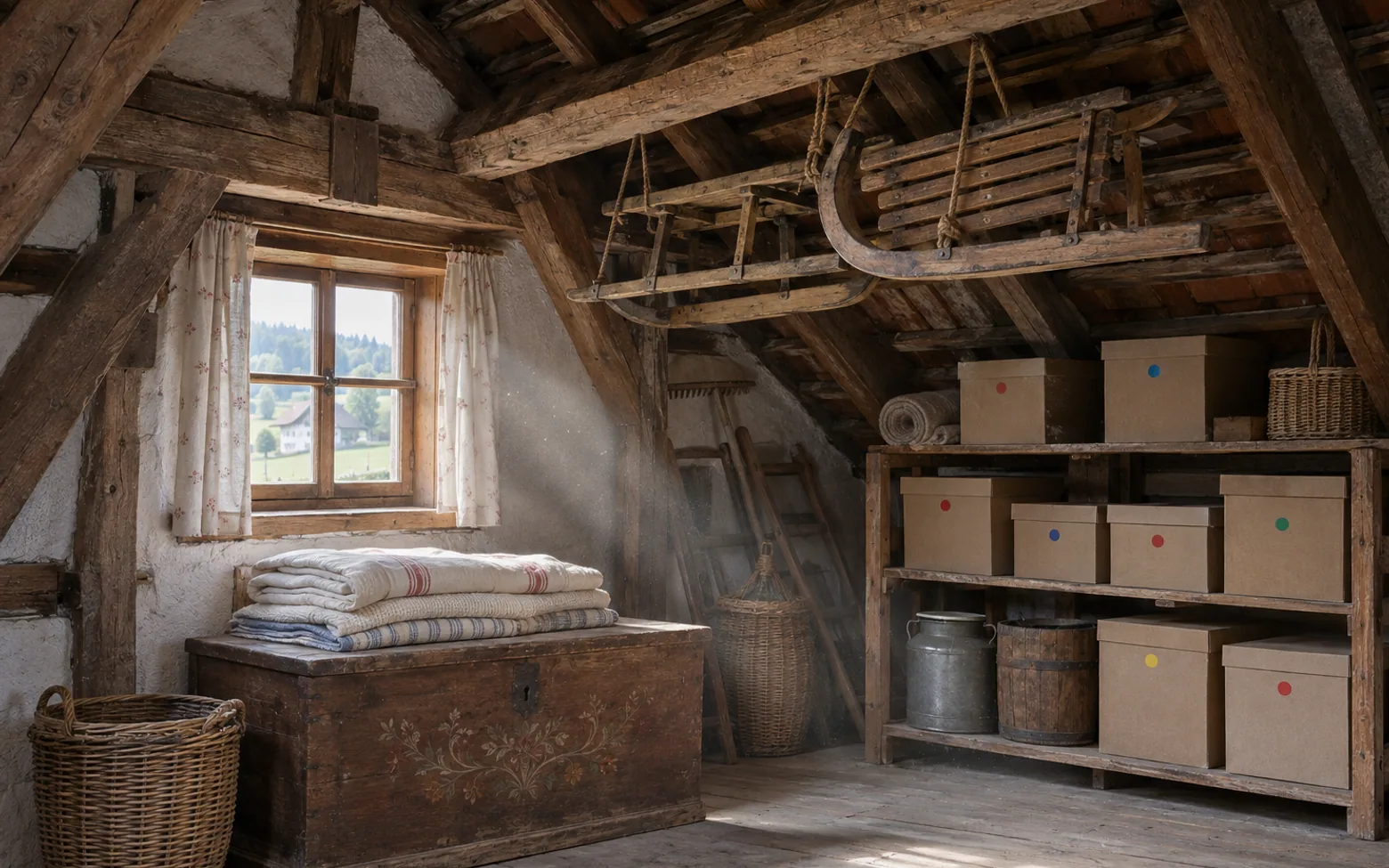
Old houses hold on to things. In the villages and small towns around Augsburg, you may find a farmhouse or a post-war family home where three generations have added to the contents without anyone ever taking much away. A jar of mismatched keys sits on the cellar stairs. There are preserving jars in the pantry, sledges in the barn rafters and a chest of linen nobody has unfolded in forty years. Whether you are clearing the place after a death, helping a parent move somewhere smaller or getting ready to sell, this kind of job asks for patience as much as muscle.
Talk before you touch anything
Most of the trouble in a family clearance has little to do with furniture. It comes from one sibling assuming the clock was promised to them while another has already taken it home. Before the first box is filled, get everyone involved together, even if only on a video call. Agree on who makes decisions, what the timetable looks like and how wanted items will be shared out. If an estate or inheritance is involved, make sure the legal side is clear first, and seek proper advice before anything of value leaves the house.
Writing down what you agree feels a bit formal among relatives. It tends to be appreciated later.
Look for what is hidden
Older generations often kept their affairs in unexpected places. Go carefully through desk drawers, books, coat pockets, biscuit tins and the backs of wardrobes before anything is removed. You are looking for insurance papers, bank records, deeds, savings books, photographs and small valuables. Keep one clearly marked crate for documents and take it away from the house at the end of each visit.
If you come across old pictures, letters written in an unfamiliar script or objects whose meaning you cannot place, ask an older relative or neighbour while you still can. A five-minute conversation can turn a mystery box into family history.
Work room by room, slowly
Set a modest aim for each visit, such as a single bedroom or the pantry shelves. Trying to do it all in one long weekend leads to exhausted choices you may regret. Use coloured stickers to mark what goes where, so you can return to a room without making all those decisions again:
- Green: kept by a named family member.
- Blue: worth having looked at by a dealer or sold on.
- Yellow: donate to a local charity or community group.
- Red: to be disposed of.
Rustic furniture, enamelware and old tools can be of real interest to someone, so ask around before you assume they are rubbish. On the other hand, a thing does not have to be kept just because it is old.
Be careful in the barn and the cellar
Outbuildings deserve special caution. Old paint, fuel cans, garden chemicals and unlabelled bottles may be hazardous and should go through the proper local collection point, not into the general waste. Watch for rotten floors, unstable shelving and heavy machinery. Wear gloves and sturdy boots, and do not work alone in a loft or a cellar with poor light.
Bring in help for the heavy end of the job
When family keepsakes have been saved and the sorting is largely done, what remains is often the hardest physically: solid oak wardrobes, old bed frames, a cellar's worth of bits and pieces. It is entirely reasonable to hand this stage over. You can ask about their clearance offer in Augsburg once you have a rough idea of the volume, as this local firm covers the work from enquiry through to a broom-clean handover. Mark clearly what must stay and agree the scope before work starts. For a house a little way out of the city, mention the access, the outbuildings and the distance when you make contact.
Say goodbye properly
When the rooms are finally bare, take a last walk through. It is surprising how a house sounds different when empty. Photograph the door frame with the children's heights pencilled on it, the view from the kitchen window and anything else you would like to remember. Some families hold one last coffee on the back step, sitting on borrowed chairs. The objects have gone their separate ways by then, but the story has been kept, and that was the point of going slowly.
Small jobs
Little habits that save a cold morning
Five-minute things that pay back all winter.
Tag the shut-off valve
A bright label on the main water valve saves precious minutes if a pipe ever splits.
Keep a torch by the back door
Fetching logs or checking the yard after dark is easier and safer with a light to hand.
Note the box’s model number
When a streaming box misbehaves, the model number takes you to the right help page much faster.
Wipe the pan while it is warm
Cast iron cleans easiest straight after supper, before anything has had time to set hard.
Something to add?
We read every message.