How to Start a Fire in a Fireplace
Open the damper, warm the flue, build the fire upside down and feed it dry wood. A calm, step-by-step way to light a fireplace without a room full of smoke.
· 4 min read
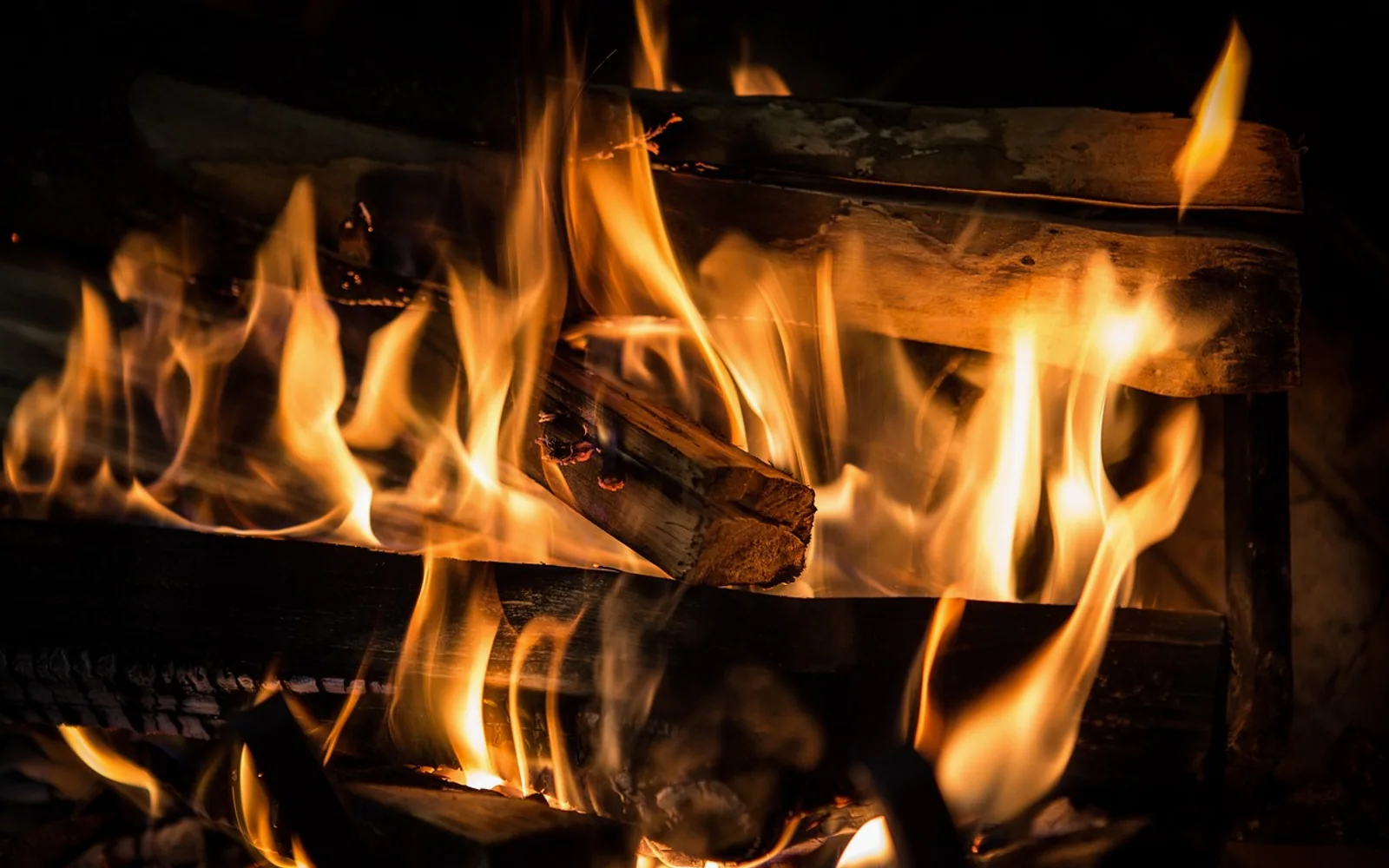
To start a fire in a fireplace, open the damper, warm the flue with a lit twist of newspaper, then build the fire in layers: larger dry logs at the bottom, smaller split pieces across them, kindling on top and a little tinder or a firelighter at the very top. Light the top. The flames work their way down, the chimney draws well from the start, and you rarely need to fiddle with it.
That is the short version. The longer one below explains each step and the few things that make the difference between a fire that sulks and one that settles in for the evening.
Before you strike a match
- Check the chimney has been inspected this season. A blocked or damaged flue is a fire and carbon monoxide risk.
- Clear the firebox. A thin bed of old ash is fine in a wood-burning fireplace; a deep heap chokes the air supply.
- Test the smoke and carbon monoxide alarms.
- Move anything that burns away from the hearth: rugs, baskets of paper, cushions, decorations.
- Have the tools ready: a fireguard or screen, a poker, long matches or a lighter, and a metal bucket for ash later.
What to burn
Everything starts with dry wood. Damp logs hiss, smoke and coat the flue with creosote, and no lighting technique fixes that. If you split and season your own, our guide on stacking firewood so it dries covers the waiting part.
| Layer | What it is | Rough size |
|---|---|---|
| Tinder | Crumpled newspaper, a natural firelighter, dry wood shavings | A few small handfuls |
| Kindling | Thin, very dry split softwood | Roughly finger to thumb thickness |
| Small fuel | Split logs | Wrist thickness |
| Main fuel | Larger seasoned logs | Whatever fits the firebox comfortably |
Never use petrol, lighter fluid or other accelerants indoors, and keep painted or treated wood, glossy magazines, cardboard boxes and rubbish out of the fire.
Step by step: the top-down fire
- Open the damper fully. Look up or reach in with a torch to be sure. A closed damper is the usual reason a room fills with smoke.
- Warm the flue. Roll a sheet of newspaper into a loose torch, light the end and hold it up near the damper for a few moments. When the smoke starts drifting upward, the chimney is drawing. Drop the paper onto the grate.
- Lay the base. Place two or three larger logs side by side on the grate or andirons, with small gaps between them.
- Add a second layer crosswise. Lay smaller split pieces across the first, again with gaps for air.
- Add the kindling. A loose criss-cross of kindling goes on top, several layers deep.
- Finish with tinder. Put the crumpled paper or a firelighter on the very top.
- Light the top in a couple of places and close the screen.
- Leave it alone. The kindling catches, drops embers onto the logs below and the fire spreads downward. Resist the urge to poke it for the first quarter of an hour.
Prefer the classic way?
A traditional fire puts the tinder at the bottom with a small teepee or log-cabin of kindling over it and larger logs added once the kindling is roaring. It works perfectly well; it simply needs more tending in the first few minutes, and it can smoke more if the flue is cold.
Keeping it going
Add one or two logs at a time once the fire has a good bed of glowing embers, placing them where air can still reach underneath. Overloading the firebox smothers it and sends more smoke up the chimney. Keep the screen in place whenever nobody is right beside the hearth, and never go to bed or leave the house with a fire still burning.
When it smokes into the room
- Check the damper is truly open.
- Crack a window slightly; a tightly sealed house can starve the chimney of air.
- Turn off extractor fans, which can pull air down the flue.
- If smoke keeps rolling in, put the fire out and have a sweep look at the chimney.
Afterwards
Let the fire burn down completely. Close the damper only once the ashes are cold, and treat ash as live for days: it goes into a lidded metal bucket, stored outside away from the house. Regular care of the firebox, from scooping ash to scrubbing soot, is set out in how to clean a fireplace.
A fire also sets the scene when friends come round. If an evening with drinks by the hearth is the plan, there are ideas for warm lighting and comfortable corners in decorating for a small cocktail evening; just keep candles and decorations well back from the fireplace.
Small jobs
Little habits that save a cold morning
Five-minute things that pay back all winter.
Tag the shut-off valve
A bright label on the main water valve saves precious minutes if a pipe ever splits.
Keep a torch by the back door
Fetching logs or checking the yard after dark is easier and safer with a light to hand.
Note the box’s model number
When a streaming box misbehaves, the model number takes you to the right help page much faster.
Wipe the pan while it is warm
Cast iron cleans easiest straight after supper, before anything has had time to set hard.
Something to add?
We read every message.