How to Keep Pipes From Freezing: Insulation, Drips and Cold-Snap Habits
The pipes that freeze are nearly always the same ones, in the same cold corners. How to find them, wrap them, keep water moving on bitter nights and deal calmly with a pipe that has frozen anyway.
· 5 min read
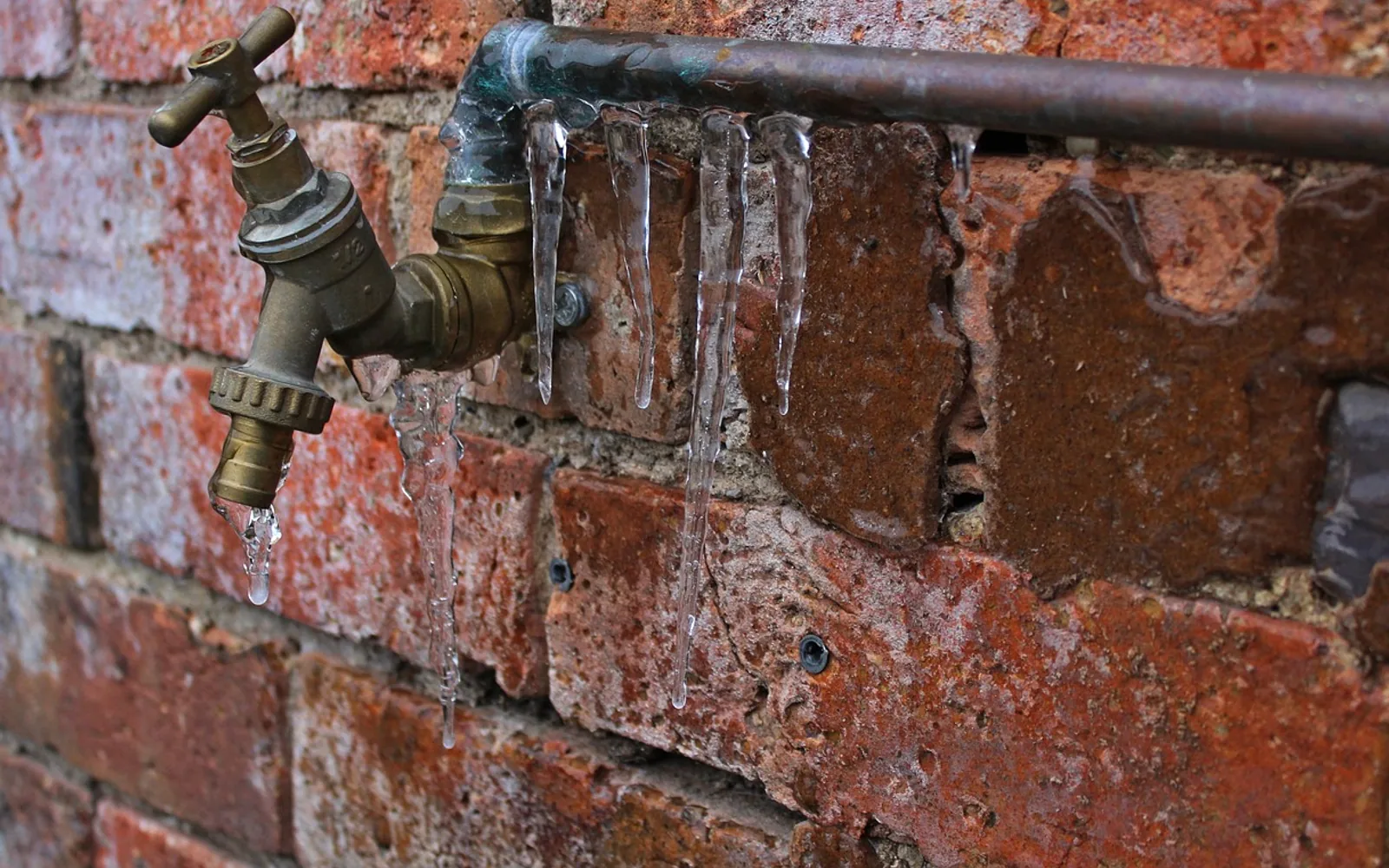
It usually starts with a tap that coughs. You turn it on first thing on a bitter morning and get a thin dribble, then nothing. Somewhere between the meter and the kitchen, water has turned to ice inside a pipe. If you are lucky it thaws quietly. If you are not, the ice has already pushed the pipe wall apart, and the real trouble starts when it melts.
The good news is that frozen pipes are one of the more predictable household problems. They happen in the same places, in the same kind of weather, and most of the prevention is cheap and done in an afternoon.
Why a frozen pipe bursts
Water expands as it freezes. In a closed pipe, a plug of ice squeezes the water trapped between itself and the closed tap, and the pressure builds until the weakest point gives. That is why a split often appears a little way from the frozen section rather than right at it, and why a burst can go unnoticed until the thaw sends water through the crack.
Which pipes are most at risk
Walk the house with a torch and look for pipes that sit anywhere the heating does not reach:
- pipes in crawlspaces, basements without heat, garages and lofts
- supply lines running along or inside exterior walls, especially under kitchen and bathroom sinks
- outdoor taps, hose bibs and the short run of pipe feeding them
- irrigation lines and pool supply pipes
- pipes near gaps where cold air gets in, such as where cables or vents pass through a wall
Houses on a slab, older farmhouses with additions built over time, and cabins that sit empty for weeks tend to have a few of these hidden away. If any pipe in the house has frozen before, start there.
How to insulate pipes
Insulation does not add heat. It slows the rate at which a pipe loses it, which buys time through a cold night. For most exposed runs, foam pipe sleeves from a hardware store are the simplest answer.
- Measure the pipe. Sleeves are sold by pipe size, so check the diameter before you buy. A loose sleeve leaves a cold gap.
- Clean and dry the pipe. Wipe off dust and any condensation so the sleeve sits snugly.
- Fit the sleeve. Most are pre-slit along their length; open the slit, press it over the pipe and close it.
- Seal the seams and joints. Tape the slit closed and wrap the joints between lengths. Cut sleeves at an angle where the pipe turns a corner so the pieces meet neatly.
- Do not skip the awkward bits. Elbows, valves and the last stretch before an outside wall are exactly where cold creeps in.
Where a pipe runs through a really cold space, people sometimes add electric heat cable under the insulation. Use only a product listed for that purpose, follow the maker's instructions exactly, plug it into a protected outlet, and never wrap it over itself. If you are unsure about any of that, have a plumber or electrician fit it.
Seal the draughts too. A small gap in a sill plate or around a pipe entry can chill a pipe far more than the room temperature suggests. Expanding foam or caulk, used according to the label, closes most of them.
Habits for the coldest nights
When the forecast turns sharp, a few small routines protect the pipes you cannot easily insulate:
- Let a tap drip. A slow trickle of cold water from a tap on an outside wall keeps water moving and relieves pressure in the line.
- Open the cabinet doors under sinks on exterior walls so warm room air reaches the pipes. Move cleaning products out of reach of children first.
- Keep the heating steady day and night rather than letting the house drop sharply overnight.
- Close the garage door if water lines run through it.
- Disconnect hoses and drain outdoor taps if you have not already done so.
Going away in winter
An empty house in a cold snap is the classic setting for a burst. Leave the heating on at a modest temperature rather than off, ask someone to check the house after very cold nights, and make sure they know where the main shut-off valve is. For longer absences, or a cabin that will stand empty all winter, a plumber can tell you whether the system should be drained completely. That and the other autumn jobs are part of the wider list in how to winterize a house.
If a pipe has already frozen
Signs include no water or only a trickle from one tap, frost on an exposed pipe, or a bulge in it. Act calmly and in this order:
- Find the main shut-off valve and be ready to close it. If you see water or suspect a split, close it now.
- Open the affected tap. As the ice melts, running water helps clear the rest and shows you when flow returns.
- Warm the pipe gently, starting from the tap end and working back toward the frozen section. A hair dryer, a portable heater kept at a safe distance, or towels soaked in hot water all work.
- Keep going until full pressure returns, then check the whole run for drips.
| Safe ways to thaw | Never use |
|---|---|
| Hair dryer on a low or medium setting | A blowtorch, propane torch or any open flame |
| Towels soaked in hot water, changed often | Charcoal or camp stoves indoors |
| A space heater kept well clear of anything that burns | Electrical appliances standing in water |
If you cannot find the frozen section, cannot reach it, or the pipe sits inside a wall, call a plumber rather than opening walls or ceilings yourself. The people behind that call are worth knowing before an emergency; there is more on what they do in the work of skilled plumbers.
When a pipe bursts
Turn off the main water supply straight away and open the taps to drain what is left in the system. If water is near light fittings, sockets or the consumer unit, keep clear and switch off the power at the main only if you can reach it safely from a dry spot. Move belongings out of the way, photograph the damage for your insurer and get the pipe repaired before turning the water back on.
Water spreads into floors and wall cavities faster than it seems, and damp left behind can lead to mould. The steps that follow a leak, and why speed matters, are covered in our piece on water damage restoration.
A little foam, a dripping tap and an open cabinet door are not exciting jobs. They are, though, the difference between a cold morning and a soaked ceiling.
Small jobs
Little habits that save a cold morning
Five-minute things that pay back all winter.
Tag the shut-off valve
A bright label on the main water valve saves precious minutes if a pipe ever splits.
Keep a torch by the back door
Fetching logs or checking the yard after dark is easier and safer with a light to hand.
Note the box’s model number
When a streaming box misbehaves, the model number takes you to the right help page much faster.
Wipe the pan while it is warm
Cast iron cleans easiest straight after supper, before anything has had time to set hard.
Something to add?
We read every message.