How to Clean a Cast Iron Pan
Cast iron is tougher than its reputation, but it does like a routine. Here is how to clean a cast iron pan after supper, rescue a rusty one and store it well.
· 3 min read
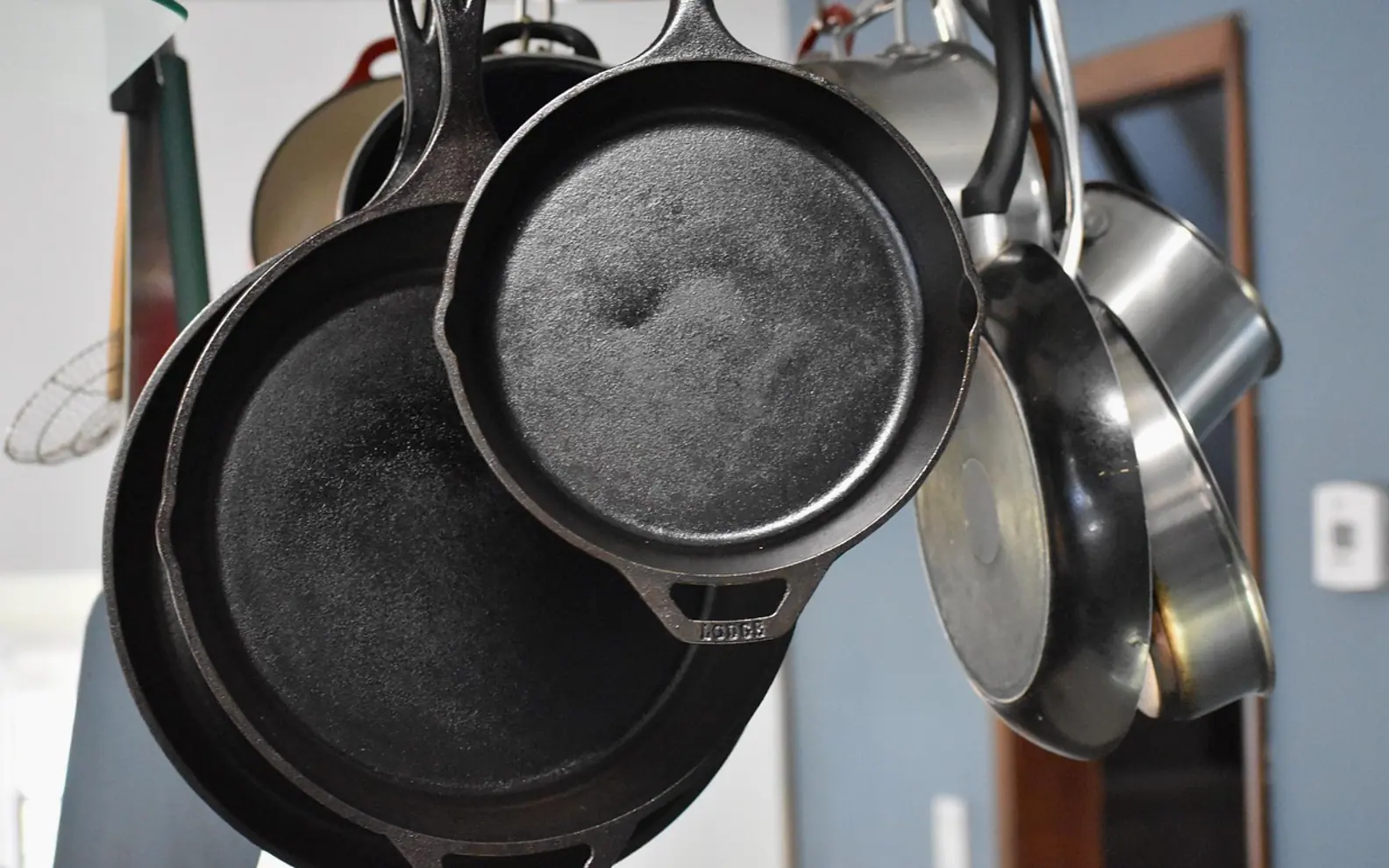
A well-loved cast iron pan has a dark, satiny surface that comes from years of cooking. That surface is the seasoning: thin layers of oil baked onto the metal until they form a natural, slick coating. Cleaning cast iron is mostly about removing food without stripping that layer, then keeping the pan dry so rust has no chance.
It is less fussy than people fear. The pan in the back of grandma's cupboard survived decades of ordinary washing up. Here is the routine.
Everyday cleaning
- Let it cool a little. Clean the pan while it is still warm, but not so hot that it burns your hands or spits steam at you. Always use an oven mitt or handle cover; the handle gets as hot as the pan.
- Scrape out the leftovers. A flat wooden or plastic scraper lifts most food easily.
- Wash with hot water. A small drop of mild dish soap is fine for most well-seasoned pans. The old rule against soap dates from harsher soaps.
- Scrub gently. Use a stiff brush, a non-scratch scrubber or a chain mail scrubber. Avoid steel wool for everyday cleaning; save it for rust.
- Dry it completely. Towel it off, then set it over a low burner for a few minutes until every trace of moisture is gone.
- Oil it lightly. While still warm, rub in a few drops of neutral cooking oil with a paper towel, then wipe away as much as you can. It should look dry, not glossy.
Stuck-on food
For a stubborn crust, pour in a little water, bring it to a simmer for a few minutes and scrape as it loosens. Coarse salt with a splash of oil also makes a gentle scouring paste: rub it round with a folded paper towel, then rinse. Do not leave the pan soaking in the sink; long soaks are exactly how rust starts.
Things cast iron dislikes
- The dishwasher. It strips seasoning and almost guarantees rust.
- Sudden temperature changes. Plunging a very hot pan into cold water can, in rare cases, warp or crack it. Let it cool for a while first.
- Air-drying. Even a damp patch overnight can leave orange spots by morning.
- Long-simmered acidic dishes such as tomato sauce, which can wear at newer seasoning and taste metallic. Short cooking is usually fine.
Troubleshooting
| Problem | Likely cause | What to do |
|---|---|---|
| Sticky, tacky surface | Too much oil left on after cleaning | Heat the pan upside down in the oven to bake off the excess, then wipe thinner next time |
| Orange rust spots | Moisture left on the pan | Scrub the spots away, wash, dry and re-season |
| Dull grey patches | Worn seasoning | Cook with a little more fat for a while, or re-season |
| Black flakes in food | Built-up carbon or flaking seasoning | Scrub firmly, then re-season the bare spots |
Rescuing a rusty pan
Rust looks dramatic but is usually only on the surface. Scrub it off with steel wool and a little soapy water until you reach bare grey metal. Rinse, dry thoroughly on the stove, and then re-season:
- Rub a very thin layer of neutral oil over the whole pan, inside, outside and handle, and buff off the excess.
- Place it upside down on the middle oven rack, with a sheet of foil or a tray on the rack below to catch drips.
- Bake it at a high oven temperature for about an hour, then turn the oven off and let the pan cool inside.
- Repeat once or twice for a deeper finish.
Seasoning produces smoke, so open a window and switch on the extractor fan. Handle the pan only with thick oven mitts until it has fully cooled. If a pan has a crack, deep pitting that will not hold seasoning or a badly warped base, retire it.
Storing it
Keep cast iron somewhere dry. If you stack pans, put a paper towel between them to protect the surface and absorb any humidity. Leave lids off or slightly ajar so air can move.
Cast iron also travels well. It is the classic pan for cooking over coals, and a skillet of potatoes over a backyard fire pit is hard to beat; just use a proper grill grate and long mitts. Back indoors, cleaning it by good light makes it easier to spot missed bits, which is one reason we like under cabinet lighting over the counter.
Look after it like this and the pan will only get better, one supper at a time.
Small jobs
Little habits that save a cold morning
Five-minute things that pay back all winter.
Tag the shut-off valve
A bright label on the main water valve saves precious minutes if a pipe ever splits.
Keep a torch by the back door
Fetching logs or checking the yard after dark is easier and safer with a light to hand.
Note the box’s model number
When a streaming box misbehaves, the model number takes you to the right help page much faster.
Wipe the pan while it is warm
Cast iron cleans easiest straight after supper, before anything has had time to set hard.
Something to add?
We read every message.