How to Stack Firewood So It Dries
Wet wood hisses, smokes and leaves tar in the chimney. A good stack fixes most of that. Here is how to stack firewood so sun and wind can do their slow work.
· 4 min read
Anyone who has tried to light a fire with green wood knows the sound: a long, sulky hiss, a lot of smoke and very little flame. The log is boiling off its own water before it can burn. Dry wood, by contrast, catches quickly, burns hotter and leaves far less soot and creosote behind in the flue.
Drying wood is called seasoning, and you do not need special equipment for it. You need time, air and a sensible stack. The stack is the part you control.
Split before you stack
Whole rounds dry very slowly because the bark acts like a raincoat and the water has nowhere to go but out of the cut ends. Splitting opens up the wood and gives moisture far more surface to escape from. Split pieces to a size that fits your stove or fireplace comfortably, and do it soon after the tree comes down rather than leaving rounds in a heap.
When splitting, wear eye protection, sturdy boots and gloves, keep the area clear of children and pets, and use a chopping block at a comfortable height so the axe or maul swings into wood and not toward your shins.
Pick the right spot
Wood dries fastest where sun and wind can both reach it. Look for:
- An open place that gets several hours of sun, ideally with the long side of the stack facing the prevailing breeze.
- Ground that drains well, so rain does not pool around the bottom row.
- Some distance from the house. A woodpile against a wall traps damp, shelters insects and rodents right where you do not want them, and adds fuel close to the building.
- A walkable path to the back door, because you will be fetching armfuls in the dark.
Get it off the ground
Wood sitting on soil wicks up moisture and starts to rot from the bottom. Lay the first row on something that keeps air moving underneath: old pallets, a pair of treated rails, a metal log rack or a bed of gravel with a couple of sacrificial poles on top.
Build stable ends
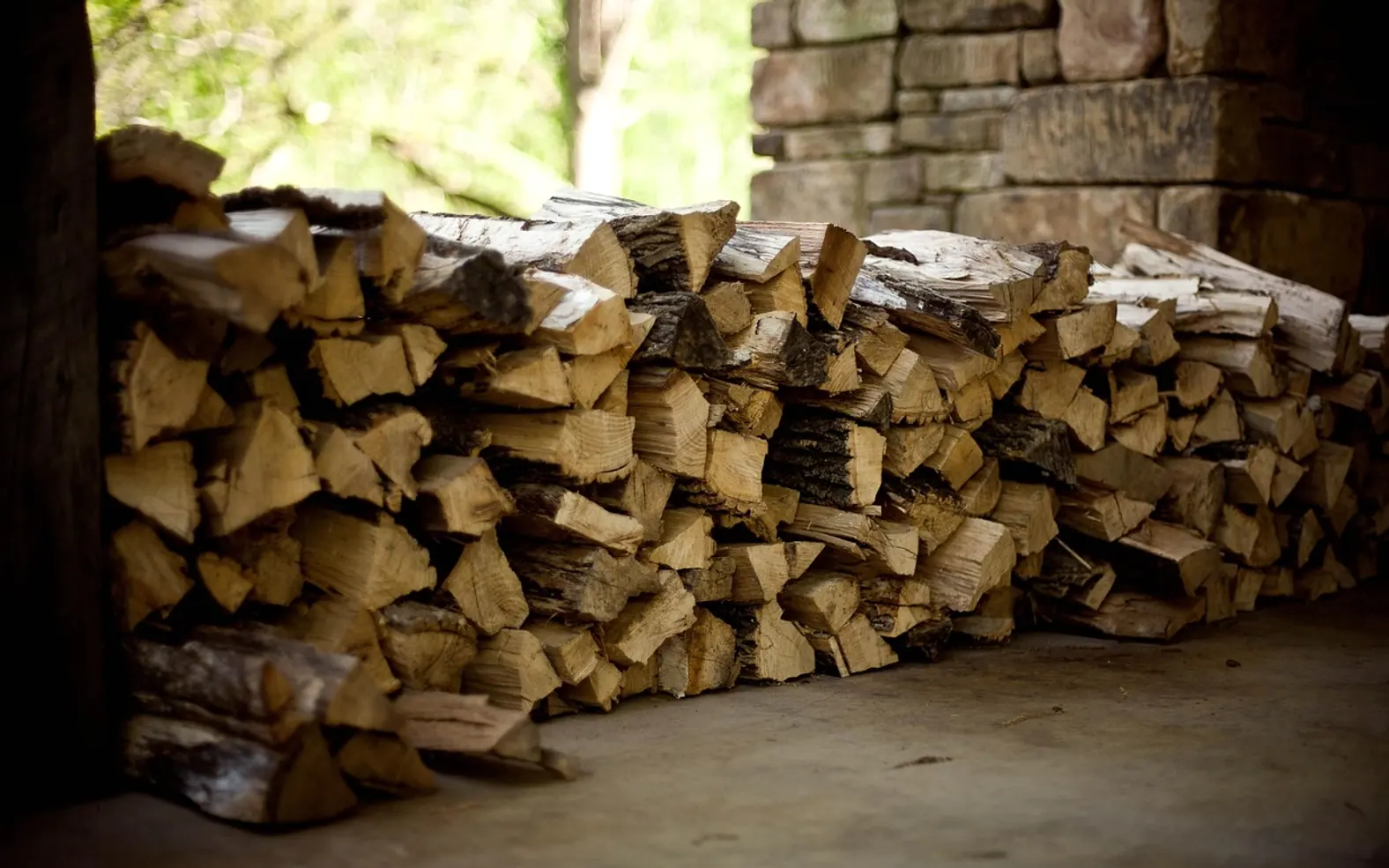
The ends of a stack carry the most strain. Many people build each end as a small crisscross tower, two pieces one way, two pieces the other, like a log cabin corner. These towers, sometimes called cribs, hold the middle in place and let air through.
- Build one crisscross end pillar to the height you want.
- Lay rows of split wood between the pillars, bark side up on the top row so it sheds rain.
- Keep pieces roughly parallel and snug, but not crammed tight.
- Stagger the joints row by row, the way bricks are laid.
- Finish with the second pillar and step back to check that nothing leans.
Single rows dry best. If you need several, leave a gap between them wide enough for air to pass.
Cover the top, not the sides
A tarp wrapped all the way round turns a woodpile into a damp tent. Cover only the top, with a sheet of roofing, a few boards or a tarp weighted at the edges, and leave the sides open to the wind. A simple woodshed with an open front does the same job more neatly.
How to tell when it is ready
There is no fixed calendar, because species, piece size and climate all change the pace. Dense hardwoods tend to take noticeably longer than softwoods, and many people plan on at least one full warm season before burning. Look for these signs instead:
| Sign | Seasoned wood | Green wood |
|---|---|---|
| Cut ends | Darker, with radial cracks | Pale and fresh-looking |
| Weight | Feels light for its size | Heavy and cold |
| Sound | Two pieces knocked together ring hollow | Dull thud |
| Bark | Loose, peels away easily | Tight to the wood |
An inexpensive moisture meter takes the guessing out of it. Push the pins into a freshly split face rather than the outside. Many stove manuals and burn guides suggest wood should read below about 20 percent before it goes in the firebox; follow whatever your own appliance maker recommends.
Stack safely
- Keep stacks no higher than you can reach comfortably, and lower if children play nearby.
- Wear gloves; woodpiles are popular with spiders, wasps and the occasional mouse.
- Bring in only a day or two of wood at a time so pests stay outdoors.
- Keep the main pile well away from any fire pit, grill or chimney outlet.
Once the wood is dry, the next jobs are inside: keeping the hearth clean (see how to clean a fireplace) or carrying an armful out to the yard for an evening by the backyard fire pit. Either way, the work you did with the stack is what makes the fire behave.
Small jobs
Little habits that save a cold morning
Five-minute things that pay back all winter.
Tag the shut-off valve
A bright label on the main water valve saves precious minutes if a pipe ever splits.
Keep a torch by the back door
Fetching logs or checking the yard after dark is easier and safer with a light to hand.
Note the box’s model number
When a streaming box misbehaves, the model number takes you to the right help page much faster.
Wipe the pan while it is warm
Cast iron cleans easiest straight after supper, before anything has had time to set hard.
Something to add?
We read every message.