How to Make Hummingbird Food at Home
Homemade hummingbird nectar takes two ingredients and five minutes. Here is the usual sugar-to-water ratio, what never to add, and the cleaning routine that keeps the feeder safe.
· 4 min read
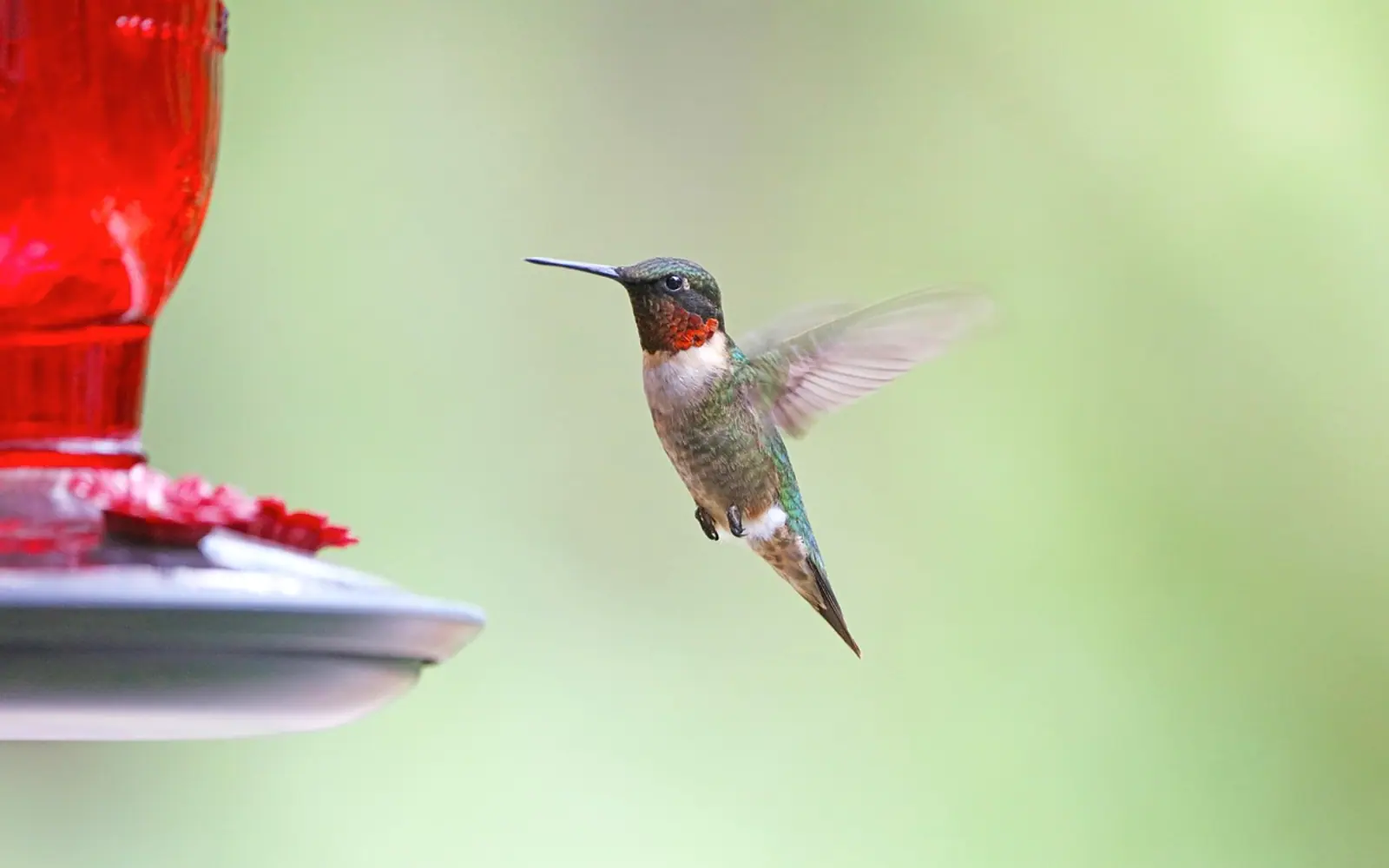
Hummingbird food is nothing more than plain white sugar dissolved in water, usually one part sugar to four parts water. Stir until the sugar has completely dissolved, let it cool, fill a clean feeder and change the nectar every few days. No dye, no honey, no special mix from the shop.
That simple recipe is close to the sucrose-rich nectar of the flowers these tiny birds visit, which is why it works so well and why adding anything else usually does harm rather than good.
The basic recipe
- Measure 1 cup of white granulated sugar and 4 cups of water. Scale up or down as you like, keeping the same proportion.
- Warm the water in a pan and stir in the sugar until no crystals remain. Boiling is not essential if your water is clean, but bringing it briefly to the boil can help the nectar last a little longer.
- Let it cool to room temperature before filling the feeder. Warm syrup can warp plastic parts and spoil faster.
- Store any extra in a covered jar in the fridge and use it within about a week.
What not to add
| Ingredient | Why to leave it out |
|---|---|
| Red food colouring | Birds find feeders by their red parts, not the colour of the liquid. Dye adds nothing they need. |
| Honey | Ferments quickly and can encourage harmful mould growth. |
| Brown, raw or organic sugar | Contains extra minerals and residues that are not part of a natural flower nectar. |
| Artificial sweeteners | Provide no energy, and energy is the whole point for a bird this small. |
| Bought "instant nectar" with additives | Unnecessary; plain sugar water does the job. |
How often to change the nectar
Sugar water spoils, and spoiled nectar can make birds ill. Heat is the deciding factor:
- In mild weather, refresh it every three to five days.
- In hot spells, every day or two.
- Any time it turns cloudy, stringy or shows black specks, empty it straight away, whatever the date.
It is better to fill the feeder only partway and top it up often than to fill it to the brim and leave it standing. A half-full feeder that is always fresh serves the birds far better than a full one going sour in the sun.
Keeping the feeder clean
Every time you change the nectar, rinse the feeder in hot water. Once a week, or whenever you notice mould, take it apart and give it a proper clean.
- Scrub the reservoir and ports with a bottle brush and a small pipe-cleaner style brush.
- Soak stubborn spots in a mild solution of white vinegar and water.
- Avoid strong-smelling soaps, which can leave a residue. If you do use a little dish soap, rinse very thoroughly.
- Let every part dry before reassembling.
Choose a feeder that comes apart easily. Saucer-style feeders with a flat top are usually simpler to clean than narrow bottles with fiddly bee guards.
Where to hang it
A little thought about placement means more visits and fewer problems:
- Partial shade keeps nectar fresher for longer than full afternoon sun.
- Near cover, such as a shrub or small tree a short flight away, gives birds somewhere to perch and watch between sips.
- Close to a window or well away from it. Very near the glass, birds cannot build up speed to hit it hard; far off, they are unlikely to mistake reflections for open sky.
- Out of reach of cats, and away from spots where a cat could crouch unseen below.
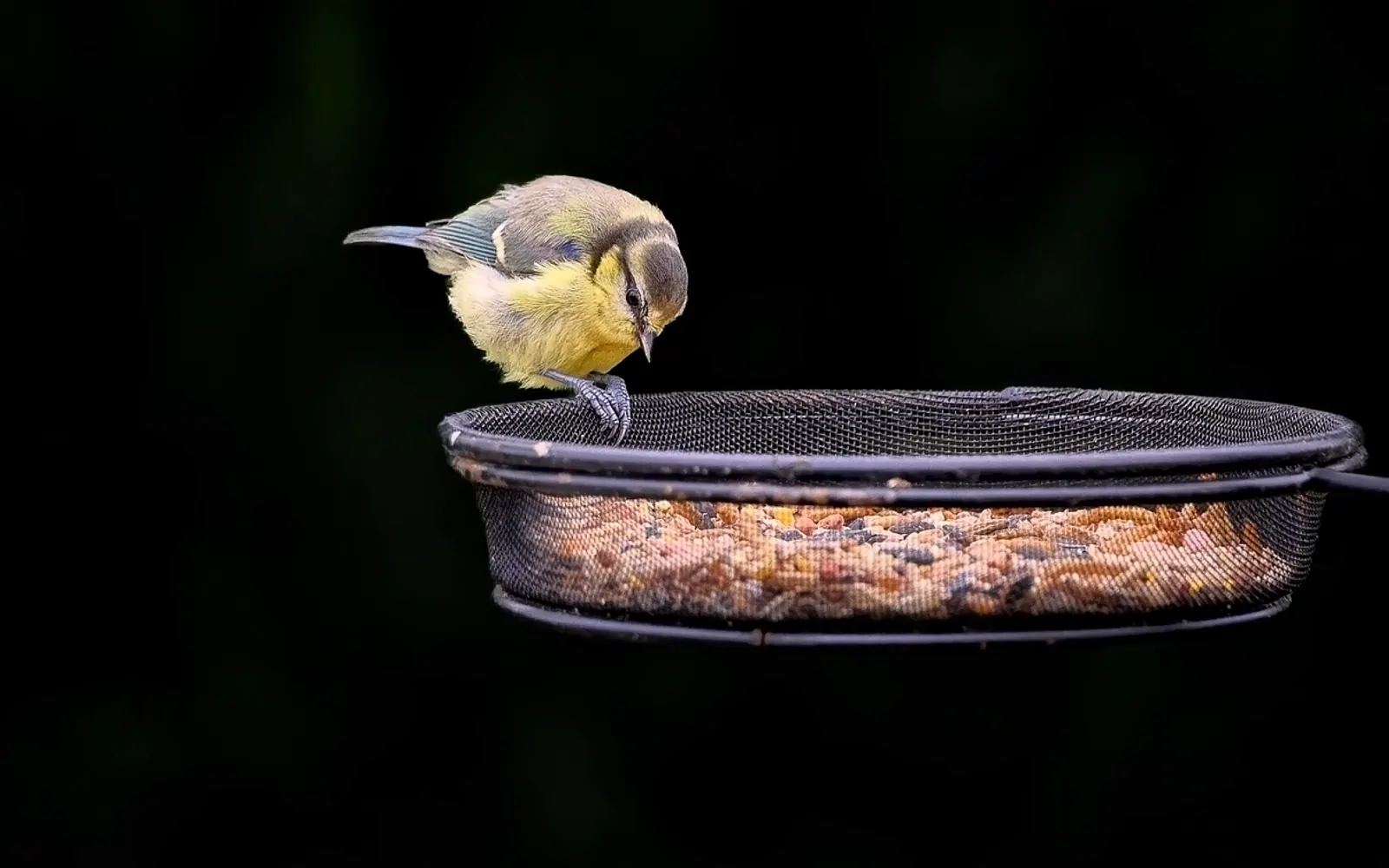
If you already keep a seed station going, set the hummingbird feeder a little apart from it. The bustle around a homemade bird feeder can be busy enough to put a shy hummingbird off.
Questions people often ask
Is a stronger mix better?
The one-to-four ratio is widely recommended because it resembles natural nectar. Some people make it a little richer in cold snaps, but there is no need to experiment; the standard mix suits most situations.
How do I keep ants and bees away?
An ant moat, a small cup of water hung above the feeder, stops ants from walking down the hanger. Feeders with built-in bee guards and red rather than yellow ports tend to attract fewer wasps and bees. Wiping up spills also helps.
When should I take the feeder down?
Many people leave a feeder up for a couple of weeks after they see the last hummingbird of the season, in case late travellers pass through. A feeder does not stop birds from migrating. When you finally bring it in, wash it, dry it and pack it away with the rest of the autumn jobs on your winterizing checklist.
A five-minute ritual
Changing the nectar soon becomes part of the morning: rinse, refill, hang, and then stand back with a cup of coffee to see who arrives. Keep the recipe simple and the feeder clean, and the rest takes care of itself.
Small jobs
Little habits that save a cold morning
Five-minute things that pay back all winter.
Tag the shut-off valve
A bright label on the main water valve saves precious minutes if a pipe ever splits.
Keep a torch by the back door
Fetching logs or checking the yard after dark is easier and safer with a light to hand.
Note the box’s model number
When a streaming box misbehaves, the model number takes you to the right help page much faster.
Wipe the pan while it is warm
Cast iron cleans easiest straight after supper, before anything has had time to set hard.
Something to add?
We read every message.