How to Make a Sourdough Starter From Scratch
Flour, water, a jar and about a week of patience. A day-by-day plan for making a sourdough starter from scratch, keeping it alive and knowing when it is strong enough to bake with.
· 4 min read
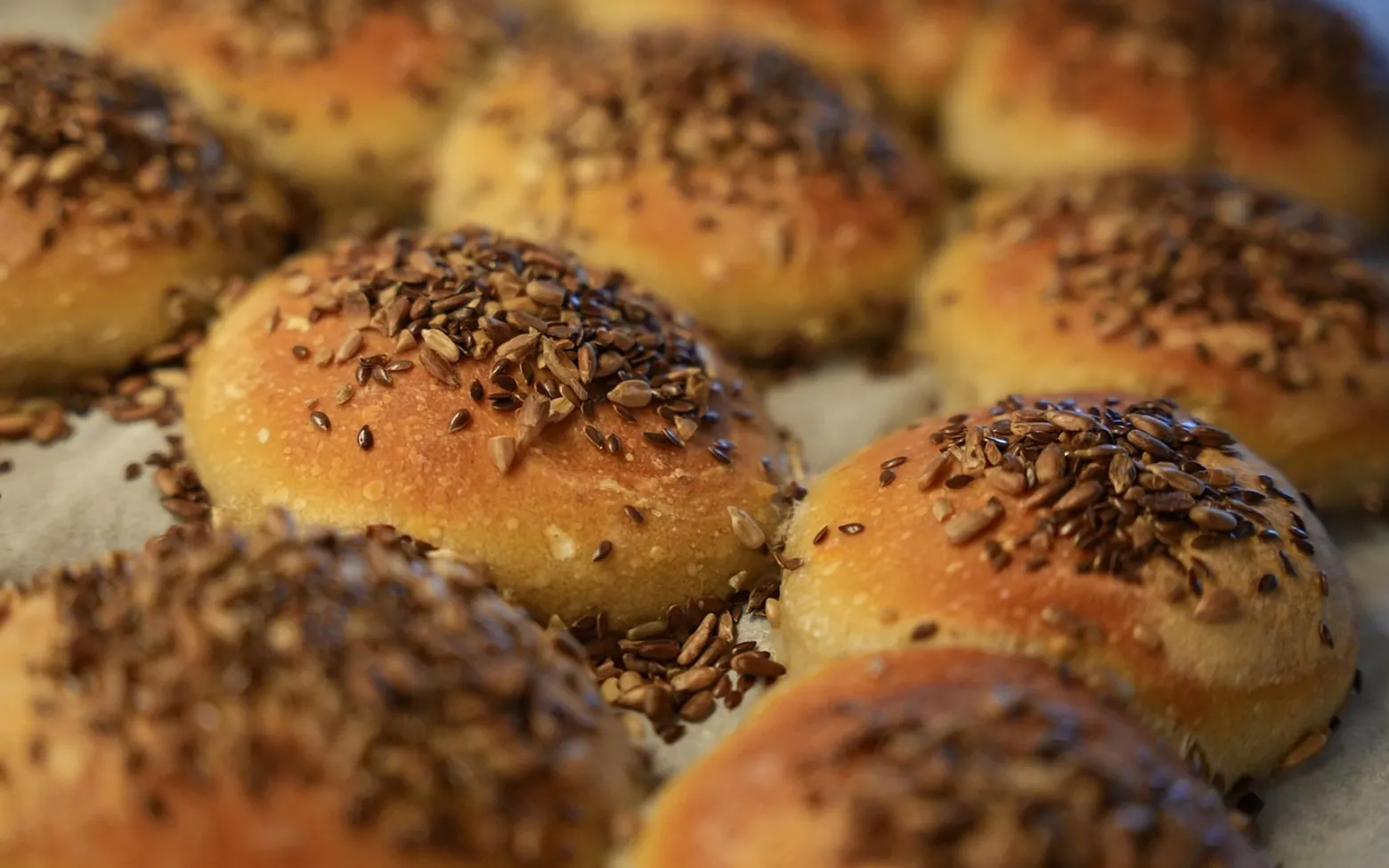
To make a sourdough starter, stir equal weights of flour and water in a clean jar, cover it loosely, and keep it somewhere comfortably warm. Every day, throw away most of the mixture and feed what is left with fresh flour and water. Somewhere between the fifth and the fourteenth day it will begin to rise and fall on a predictable rhythm, and that is when it is ready to raise a loaf.
That is the whole method. Everything below is about doing it with less guesswork.
What a starter actually is
A sourdough starter is a living culture of wild yeasts and lactic acid bacteria that already sit on grain and in the kitchen around you. Flour and water give them food and a home. The yeasts make the gas that lifts the bread; the bacteria make the acids that give sourdough its tang and help it keep. Once the culture is established you never start again: you simply keep feeding a small portion, the way people once kept a crock going on the back of the stove for years.
What you need
- A glass jar that holds at least a litre, so there is room to rise. Straight sides make it easier to see what is happening.
- Flour. Whole wheat or whole rye gets things moving faster because the bran and germ carry more natural yeast and nutrients. You can switch to plain bread flour once the starter is lively.
- Water. Lukewarm, and if your tap water is heavily chlorinated, leave a jug standing out overnight or use filtered water.
- A kitchen scale. Cups work, but weighing removes most of the confusion about thickness.
- A rubber band or a strip of tape to mark the level after each feed.
The day-by-day plan
- Day 1. Mix 50 g whole grain flour with 50 g water into a thick paste. Scrape down the sides, rest the lid on top without sealing it, and leave the jar somewhere around warm room temperature.
- Day 2. You may see nothing at all. Stir, and leave it alone.
- Day 3. Small bubbles and a sour or even slightly odd smell are normal now. Discard all but about 50 g, then feed with 50 g flour and 50 g water.
- Days 4 to 6. Repeat the discard and feed once a day. Do not be alarmed if a burst of early activity suddenly goes quiet; the first bacteria to bloom fade as the culture turns more acidic, and the yeasts take over after them.
- Day 7 onwards. If it is rising reliably after each feed, move to two feeds a day, roughly twelve hours apart, to build strength. If it is still sleepy, keep to one feed and be patient.
Keep the discard in a separate jar in the fridge if you hate waste. It goes well into pancakes, crackers or flatbreads cooked in a well-seasoned cast iron pan.
How to tell it is ready
A starter that is ready for baking shows several signs together:
- It at least doubles in height within a few hours of a feed, then gently falls back.
- The top is domed and bubbly at its peak, with an open, web-like texture when you pull a spoon through it.
- It smells pleasantly sour and yeasty, a little like yogurt or beer, rather than sharp or cheesy.
- It behaves the same way for several days in a row.
The float test, dropping a spoonful into water to see whether it bobs, is popular but unreliable. A rising and falling rhythm tells you far more.
Keeping it alive
| How often you bake | Where to keep it | Feeding routine |
|---|---|---|
| Several times a week | On the counter | Discard and feed once or twice daily |
| Once a week or so | In the fridge | Feed once a week; give it a warm feed or two before baking |
| Now and then | In the fridge | Feed every week or two, and expect it to need a couple of days to wake up |
A dark grey liquid on top, often called hooch, simply means the culture is hungry. Pour it off for a milder flavour or stir it back in for a sharper one, then feed.
Common problems
Why is nothing happening?
Cold is the usual reason. A kitchen that feels cool in autumn can slow a young culture to a crawl. Try the top of the fridge, a spot near (not on) a radiator, or inside the oven with only the light switched on. A spoonful of rye flour in each feed often perks it up as well.
Why does it smell like nail polish?
That solvent smell usually means the starter has run out of food. Feed it more often, or feed it more generously relative to the amount you keep.
Is it safe?
A healthy starter has a clean, sour aroma and no fuzz. If you see pink or orange streaks, fuzzy mould, or anything that looks or smells clearly wrong, throw it out, wash the jar thoroughly and begin again. When in doubt, discard it; a new one costs only a little flour.
Small habits that help
- Use a clean jar every week or two so dried crust does not build up on the rim.
- Write the feeding times on the band or a sticky note until the rhythm becomes second nature.
- Keep a spoonful of dried starter as a backup: spread a thin layer on baking paper, let it dry completely, crumble it and store it in an airtight jar.
Fermentation is a pleasant habit to stack with others. If a bubbling jar on the counter appeals to you, the same principles apply to making sauerkraut at home, where salt, cabbage and time do the work. And when that first loaf finally comes out of the oven on a cold evening, it will taste even better beside a fire laid with properly seasoned firewood.
Small jobs
Little habits that save a cold morning
Five-minute things that pay back all winter.
Tag the shut-off valve
A bright label on the main water valve saves precious minutes if a pipe ever splits.
Keep a torch by the back door
Fetching logs or checking the yard after dark is easier and safer with a light to hand.
Note the box’s model number
When a streaming box misbehaves, the model number takes you to the right help page much faster.
Wipe the pan while it is warm
Cast iron cleans easiest straight after supper, before anything has had time to set hard.
Something to add?
We read every message.